
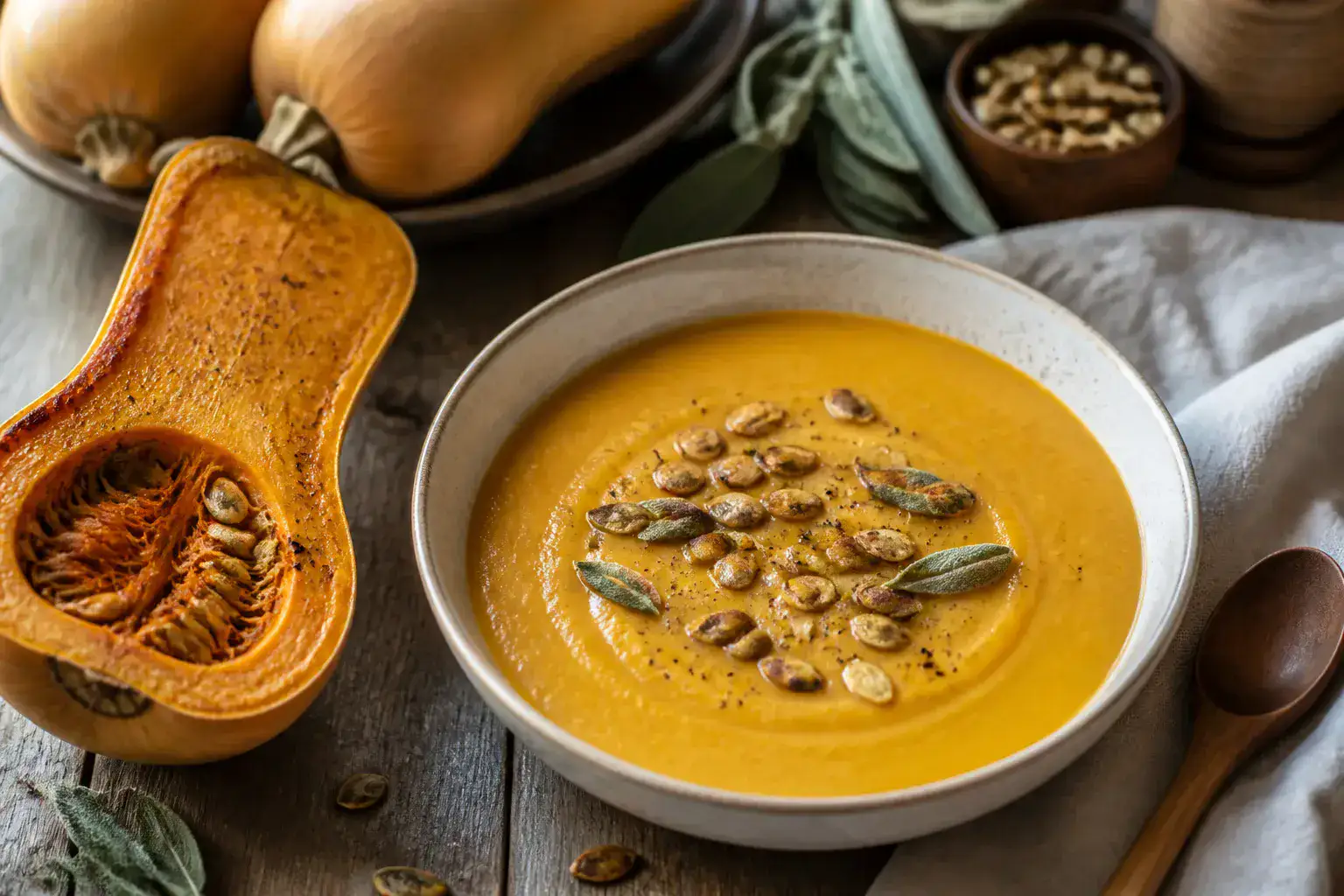
Roasting gives a storage crop a deep base, while acid and herbs keep it from feeling heavy.
Treat the squash as a pantry crop
Choose a squash with a hard rind and no soft spots. Iowa State Extension includes winter squash among crops that can store for months when handled and held in appropriate conditions. Once cut, it becomes a different kind of ingredient and should move through the refrigerator on a shorter clock.
Peel and cube the squash, or roast halves and scoop the flesh. The second option is slower to start but gives the edges a little more color.
A soup with three textures
Roast the squash with onion and a little oil until the corners are caramelized. Blend part of it with broth until smooth, then fold in a few small pieces saved from the tray. Finish with lemon, cider vinegar, or yogurt depending on the rest of the meal.
Toasted pumpkin seeds, chopped herbs, or crisp breadcrumbs add a reason to chew. Texture is what keeps a blended soup from tasting like a single note.
Storage is part of the recipe
Cool leftovers promptly, date the container, and use FoodKeeper as the safety reference for the storage method you choose. If the squash came from a market, ask the grower whether it has been cured and how it was held.
The calendar connection is simple: harvest at maturity, store with attention, and cook the crop before the next season's fresh abundance asks for the same shelf space.
Build flavor before the broth arrives
Roasting separates this soup from a pot of boiled squash. Spread the pieces rather than stacking them so moisture can escape and edges can color. Include the onion on the tray if you want sweetness, but keep garlic protected or add it later so it does not become bitter before the squash softens.
Move the roasted vegetables to a pot and add only enough broth to let a blender work safely. More liquid can always follow. Blend in batches if required by the appliance instructions, venting hot mixtures as directed. A thick first blend is easier to correct than a thin soup that must be reduced for a long time.
Taste for salt, then brightness, then richness. Lemon or cider vinegar lifts the roasted base. Yogurt or cream softens it. Chile, sage, or ginger changes the direction, so choose one lead accent instead of adding every autumn flavor at once.
Use the whole storage-crop moment
A mature winter squash should have a hard rind and intact stem, but storage life still depends on variety, curing, temperature, humidity, and damage. Iowa State's storage guidance is the place to check the crop in hand. Keep squash dry, inspect it regularly, and cook damaged fruit before sound fruit when it remains safe to use.
The seeds can become a separate garnish when cleaned and roasted, although hull thickness varies by variety. The peel may soften enough to eat on some squash and remain tough on others. Treat both as optional kitchen decisions, not universal waste-saving rules.
If one squash makes more soup than the household wants, freeze a portion promptly or share the uncut crop before it declines. Storage is valuable because it spreads work and flavor across time; it is not a challenge to keep food until the last possible day.