Use ripe tomatoes for the fresh pot, and preserve only what you can handle safely.
The ingredient list
Use ripe tomatoes, one onion, a carrot, a small rib of celery, garlic, olive oil, broth, and a handful of basil. Add a spoon of cream only if you want a rounder finish. The soup does not need sugar when the tomatoes are ripe; a little salt and a splash of acid can wake up a flat pot.
A mix of varieties is welcome. Soft tomatoes can go into the soup after you remove damaged spots. Keep any produce that smells spoiled or shows unsafe decay out of the pot.
Build the bowl
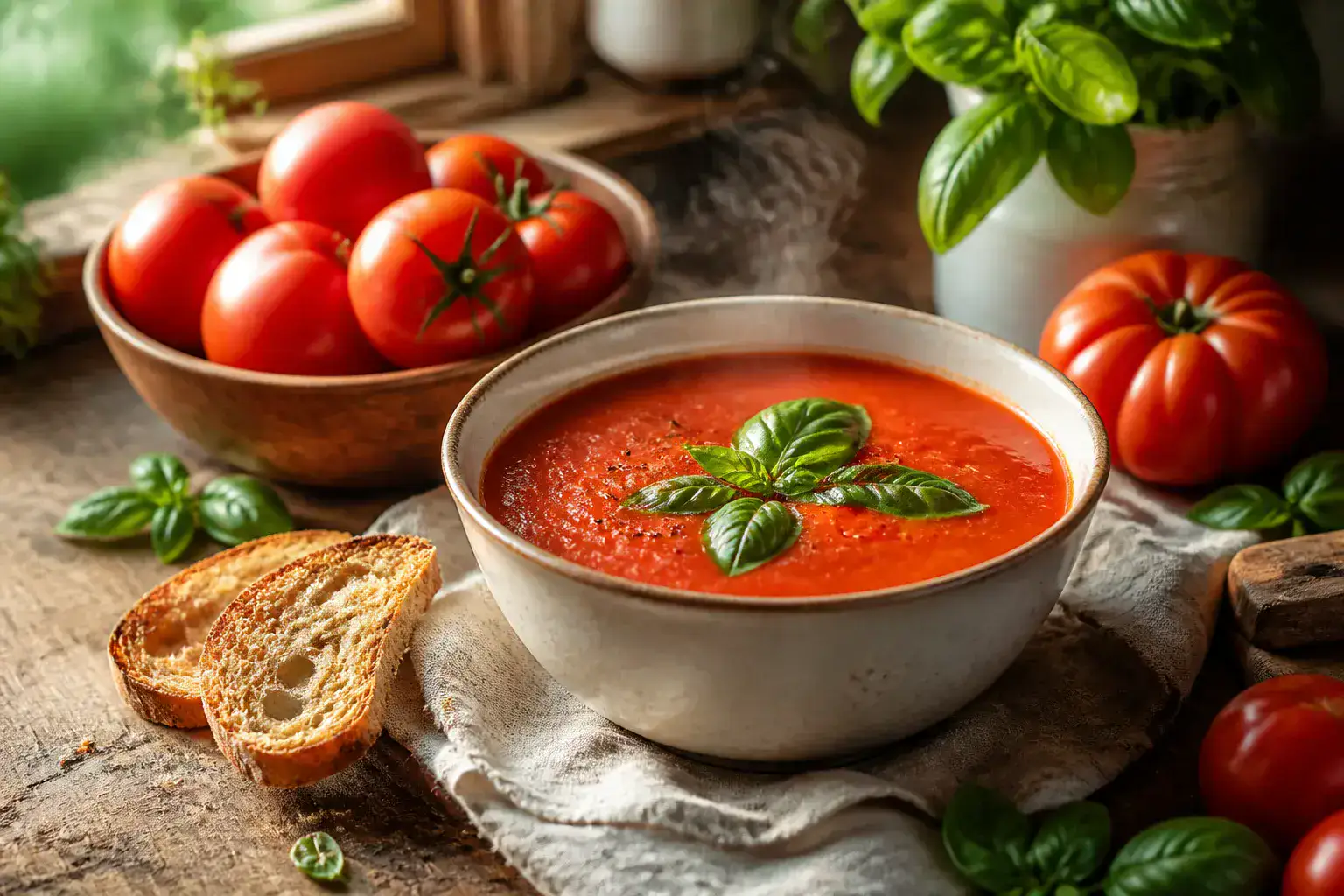
Soften the onion, carrot, celery, and garlic in oil until sweet rather than browned. Add chopped tomatoes and broth, then simmer until the vegetables collapse. Blend until smooth or leave a little texture, depending on the bread or grain you are serving beside it.
Taste at the end. Basil, black pepper, and a spoon of cultured vegetables can each pull the soup in a different direction. Keep the supporting ingredients quiet enough for the tomatoes to stay recognizable.
What to do with abundance
The easiest preservation plan is often the one you will actually finish. Cool leftovers promptly, refrigerate them in shallow containers, and use current FoodKeeper guidance for storage. If you freeze soup, leave headspace and label the date.
Iowa State's harvest guidance is a useful reminder that tomatoes have a narrow flavor window. A soup pot is one way to make that window feel generous without pretending it lasts forever.
Choose tomatoes by the job they can do
A soup can absorb the market's imperfect geometry. Dense paste tomatoes bring body, juicy slicers bring liquid, and cherry tomatoes bring sweetness and skin. Mixing them usually creates a fuller pot than insisting on one variety. What matters is sound fruit with ripe flavor, not cosmetic uniformity.
Cut one tomato before committing the whole basket. If it tastes bright and balanced, keep the supporting vegetables restrained. If it is watery, roast some of the fruit first or simmer uncovered to concentrate it. If it lacks acidity, adjust the finished bowl with lemon or vinegar rather than guessing with sugar at the start.
Ask a grower which tomatoes need using first. Split fruit that is still sound may be ideal for a same-day soup, while firm fruit can wait for sandwiches. That short conversation converts a bargain box into a sensible cooking order.
Turn one pot into three dinners
Serve the first bowl as written, with toast and herbs. Keep the remaining soup unsweetened and only lightly seasoned. On another night it can become a base for beans and greens; reduced further, it can coat pasta or grains. A neutral remainder is more flexible than a fully garnished one.
For texture, reserve roasted tomato pieces before blending or add cooked beans after. For richness, use olive oil, yogurt, or cream at the table so each serving can be adjusted. For a colder meal, chill the soup only after cooling it promptly and keep its storage history clear.
Freezing is different from shelf-stable canning. This recipe gives no canning process, and an ordinary soup formula should not be placed on a pantry shelf. Use a current tested canning recipe if that is the goal. Otherwise freeze a dated portion and leave enough headspace for expansion.