
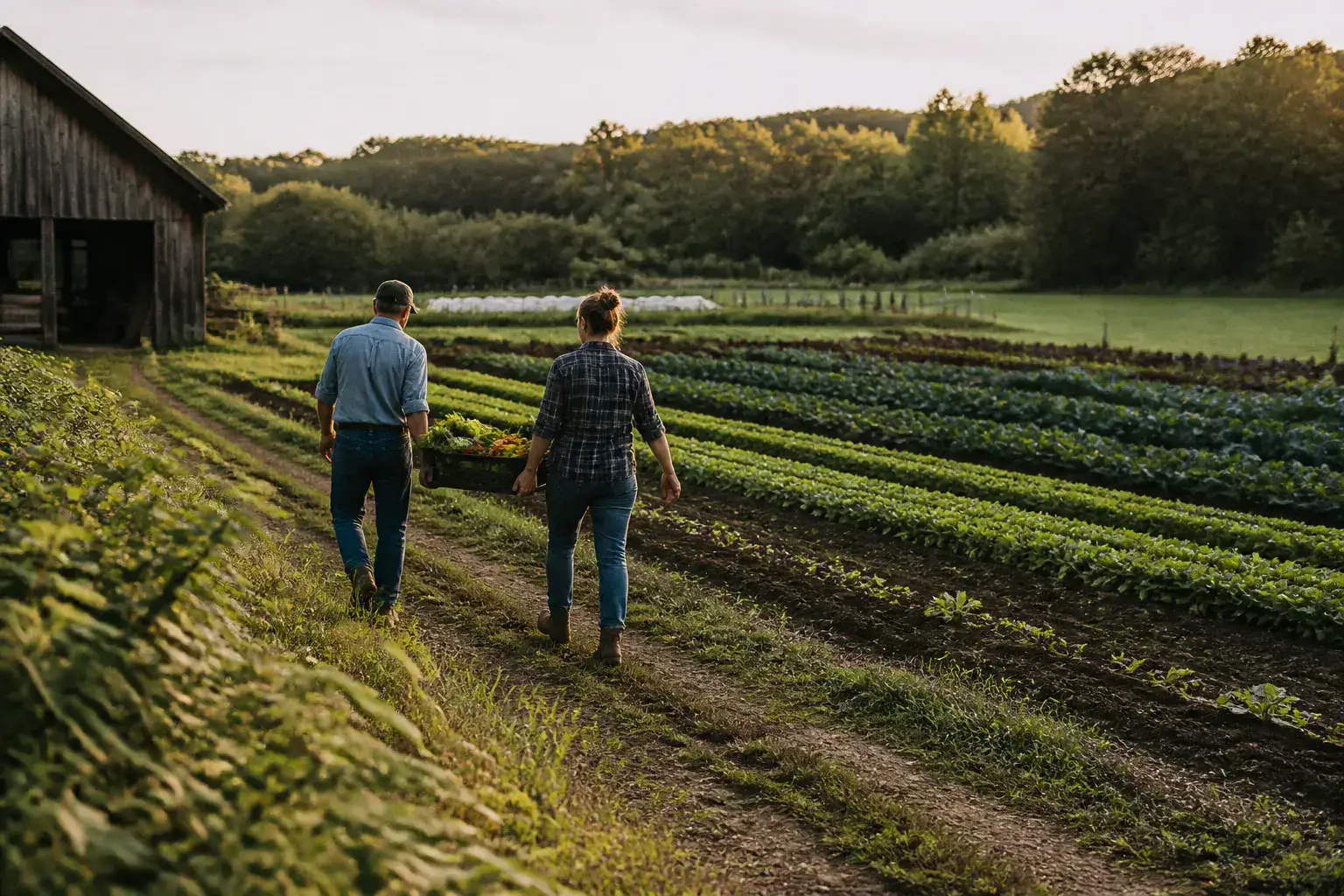
Treat family farming as an operating system of relationships, not a nostalgia label.
Start with the work, not the romance
A family farm is not defined by a single crop, a picturesque barn, or a promise that everything happens on one plot of land. It is a set of decisions made over time: who carries the risk, how land is cared for, where labor comes from, and which customers make the next season possible.
That is why a useful profile should show the practical edges. A reader needs to know what is grown, when it is available, how it is sold, and what the farm does when weather or labor changes the plan. The story becomes stronger when it can name a limit without turning the limit into failure.
The market is part of the farm
Direct sales can create a closer feedback loop between grower and eater, but closeness does not remove the need for clear information. A market listing, CSA page, or farm stand should state its season, location, product range, and update date. The USDA Farmers Market Directory is useful for orientation, while the producer remains the authority on a particular week.
For shoppers, the best questions are concrete. What is ready today? How was it stored? Which crop is next? For growers, the same questions reveal demand without requiring a grand brand story. That exchange is one of the quiet technologies of local food.
A future that can be checked
Reclaiming a farm can mean bringing land back into production, adding a new market channel, restoring soil cover, or simply making the next generation's work legible. None of those claims should be accepted on atmosphere alone. Look for dates, practices, and sources.
The historical Marilyn Farms archive is part of this site's provenance, not evidence of a current operator. Field & Table keeps the old route alive while writing a new, checkable publication about the questions that still matter.
Read the farm as a working balance sheet
A family farm has more than a financial balance sheet. It also has a labor calendar, a soil account, a set of relationships, and a finite tolerance for risk. Adding a crop can create another market opportunity while also creating new harvest days, wash-pack work, storage needs, and recordkeeping. A good farm story names both sides of that choice.
The same discipline applies to land care. Cover, living roots, reduced disturbance, and biodiversity are useful soil-health principles, but each practice has a timing and equipment cost. Ask what changed in the rotation, how success is observed, and which constraint shaped the decision. Those questions are more revealing than a label by itself.
For a reader, this turns support for family farms into something practical. Buy during the farm's real season, accept that a crop may sell out, learn which products help balance the year, and read current pickup instructions before traveling. Reliability flows in both directions.
Succession is a plan, not a family myth
The word family can hide as much as it reveals. Ownership, management, land access, and day-to-day labor may be shared in different ways, and no single arrangement proves resilience. A useful succession conversation begins with roles: who makes production decisions, who knows the customers, who holds records, and who can step in when someone is unavailable.
It also makes knowledge portable. Crop notes, field maps, market contacts, food-safety procedures, and equipment maintenance should not live in one person's memory. University of Minnesota planning tools show how crop timing and harvest windows can be made explicit. The broader lesson is that a repeatable system gives the next person something real to inherit.
That is the unsentimental meaning of reclaiming a family farm: make land, work, and relationships durable enough to continue, then describe the result with dates and evidence.