
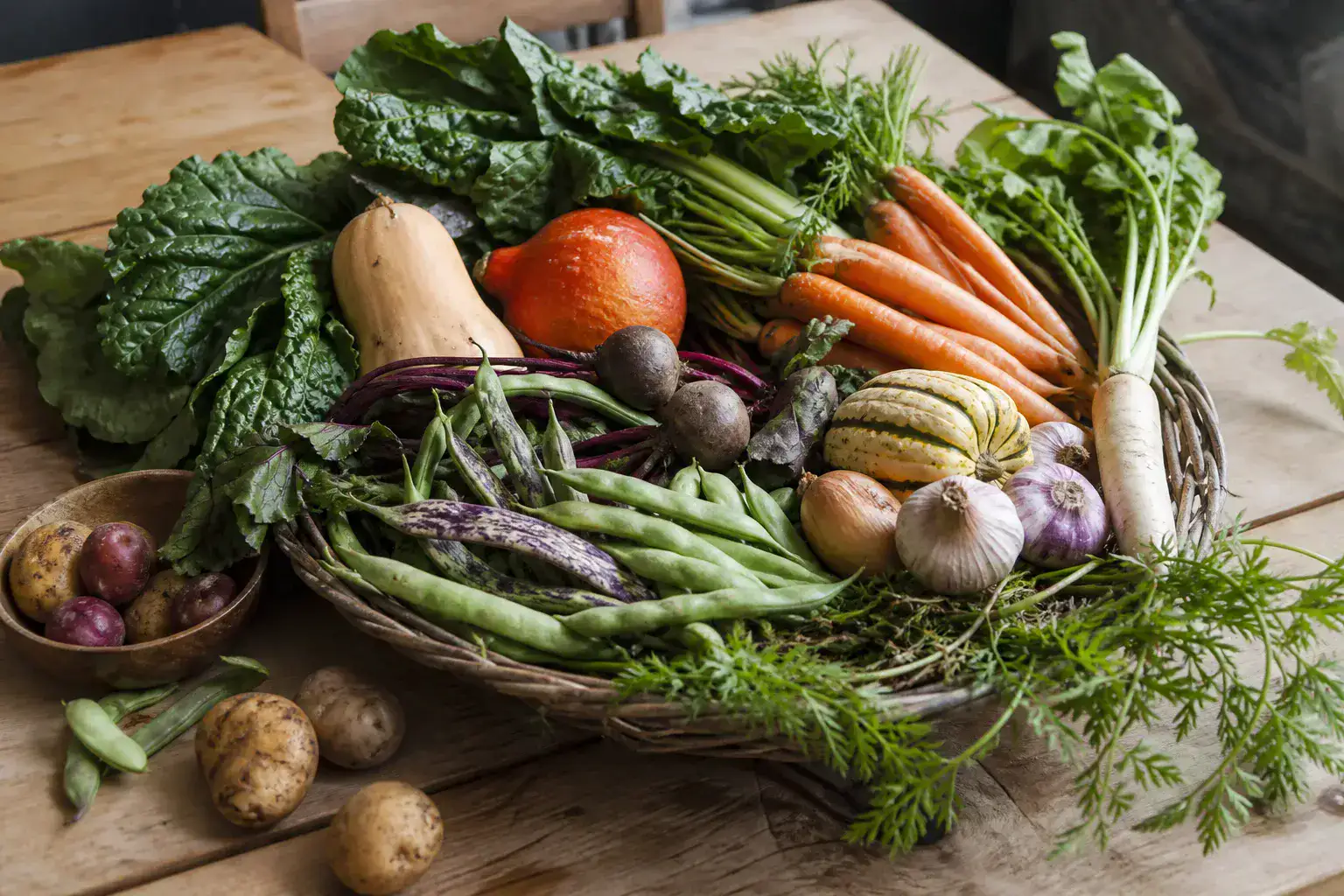
A local produce show is an amateur competition run by a horticultural society, allotment association or village hall committee, and entry is normally open to anyone who pays the small class fees and brings their exhibits to the hall during the stated staging window on show morning.
What are the local produce show entry conditions?
A local produce show is an amateur competition run by a horticultural society, allotment association or village hall committee, and entry is normally open to anyone who pays the small class fees and brings their exhibits to the hall during the stated staging window on show morning. The schedule, not the judge, sets the rules: it lists every class, the number of items allowed, the variety or size required, and the exact time by which entries must be on the bench. Read it before you sow, not the week of the show.
Entry conditions vary from show to show, but the same handful of clauses appears in almost every schedule, and they are worth reading twice.
Eligibility. Most shows are open to residents within a defined radius, members of the organising society, or holders of a plot on a named allotment site. Some add an open class for visitors. If you garden outside the boundary, check whether an open class exists before you plan a season around the show.
Fees and deadlines. Classes usually cost a small sum per entry, payable with the entry form. Forms are returned days or weeks before the show, not on the morning, because the organisers need the class list to print the cards that sit on the bench. Late entries are sometimes accepted in unfilled classes, but this is at the steward's discretion.
Number of exhibits. A class asking for three pods of peas means three, not four. A class asking for a dish of five tomatoes means five of one variety, matching in size and ripeness. Extra items can lead to a deduction or to the exhibit being marked not according to schedule.
Ownership and prior showing. Produce must have been grown by the exhibitor on their own plot or garden, and most schedules state that an exhibit may not have been shown at another show in the same season. Preserves, cakes and floral art classes carry their own rules on recipe, jar size and staging.
Children's and novice classes. Many shows run separate sections for juniors and for exhibitors who have never won a first prize. These are the easiest places to start, and the stewards will usually explain the staging if asked.
A garden notebook that tracks dates, varieties and quantities makes this far less stressful than trying to reconstruct a season in the last week. The same discipline of measuring and recording is the backbone of the notes kept at the local produce show entry conditions gathered by gardeners working small plots west of London, where schedules, bench layout and cut-flower classes are treated as one continuous subject rather than three separate ones.
How does the bench work in the hall?
The bench is the row of tables in the hall where every exhibit is placed for judging. It is not a display shelf; it is a working surface with a numbering system, and understanding it removes most first-time confusion.
Staging. Exhibitors arrive during a set window, usually an hour or two before judging. A steward at the door checks your entry card, tells you which section and class number you are in, and points you to the table. You place your exhibit on the bench in the position marked by your card, then leave the hall. Once judging begins, the hall is cleared.
Cards and numbers. Each entry has a card showing the class number and the exhibitor's number, never the name. Judges see numbers only. This is why the entry form matters: the number is assigned when the form is processed, and it must match the card on the bench.
Class order. The bench is laid out in class order, following the schedule. Vegetables usually come first, then fruit, then flowers, then preserves and home produce, then floral art and junior sections. If you cannot find your class, ask a steward rather than guessing, because an exhibit on the wrong table is judged as not staged.
Uniformity and dressing. Judges look at the class as a whole before they look at individual items. Three carrots should be the same length and thickness; five tomatoes should be one colour and one size. Roots are usually trimmed but not scrubbed to a shine, and tops are cut back to a short stub unless the schedule says otherwise. Beans are shown with the stalk end intact. Onions are often staged on rings or sand, and the schedule will say which.
After judging. The hall reopens so exhibitors and the public can see the results. Prize cards are placed beside winning exhibits. Exhibits are cleared at a stated time, and anything left behind is usually disposed of by the committee.
How should I cut and prepare flowers for the local produce show?
Cut flowers are judged on condition, form, colour and uniformity, and most of the work happens in the garden and the kitchen, not on the bench.
Cut at the right stage. For most annuals and perennials, cut when the flower is fully open but before pollen drops or petals reflex. Dahlias, chrysanthemums and roses are usually cut in the cool of the morning or late evening, when the stems are full of water. Sweet peas are cut when two or three flowers on the spike are open and the rest are in bud.
Cut with a clean, angled cut. Use sharp secateurs and cut on the diagonal just above a leaf node. Carry a bucket of clean water to the plot and plunge stems immediately; a stem that dries for ten minutes will not recover fully.
Condition the stems. Strip leaves from the lower third of the stem so nothing sits below the water line. Some stems benefit from a short, deep drink in cool water for several hours or overnight in a dark, cool place. Hollow stems and milky stems, such as poppies, are usually seared or dipped briefly in boiling water, but only if the schedule or a reliable growing guide recommends it for that genus.
Stage for the class. A class asking for three blooms of one cultivar means three stems of the same variety, matching in size and stage. A mixed vase class means a balanced arrangement, not a handful of whatever is open. Vases are usually supplied by the show or specified in the schedule; check before you assume you can bring your own.
Handle on the morning. Carry flowers upright in a box or bucket, not flat in a bag. Arrive early enough to stage without rushing, and leave the hall before judging starts. A bloom that is perfect at home can bruise in a car boot, so pad the container and keep it out of direct sun.
What should a first-time exhibitor bring?
Bring the schedule, your entry card, a pen, a cloth for wiping the bench, and a small box or crate for carrying. Bring more than the required number of items if the class allows it, so you can choose the best three on the morning. Bring a notebook to record what you staged, which class it was, and how it was judged. That record is the single most useful thing you will take home, because it tells you what to sow and when for next year's show.
Why the schedule is the real rulebook
Every question about a local produce show comes back to the schedule. It states the entry conditions, the class numbers, the number of items, the staging time and the judging standard. Judges work to that document, and stewards enforce it. Read it in winter, plan the plot around it in spring, and the bench on show morning becomes a straightforward exercise in following instructions rather than a test of nerve.