Growing herbs indoors works when three things line up: enough light, a pot that drains, and a watering habit that matches the plant instead of the calendar.
Start With Light, Not With Seeds
Growing herbs indoors works when three things line up: enough light, a pot that drains, and a watering habit that matches the plant instead of the calendar. Basil, mint, rosemary, and peppers can all produce indoors, but they fail in different ways, and the fix is usually a change in light or moisture rather than more fertilizer. A step-by-step reference for pot culture, hydroponic setups, and grow box climate is available at growing herbs indoors, which covers sowing, cuttings, and continuous harvest in Italian.
A south-facing window in the northern hemisphere gives roughly six hours of usable light in winter, and that is not enough for basil or peppers to stay compact. The plant responds by stretching: stems lengthen, leaf spacing widens, and flavor compounds dilute. A simple light meter or a phone app that reads lux will show the gap. Seedlings and leafy herbs generally want 12 to 16 hours of light per day at 200 to 400 PPFD, while fruiting plants like peppers want more.
A shop light with a white LED spectrum at 4000K to 5000K, hung 6 to 12 inches above the canopy, covers a windowsill tray. Raise the fixture as plants grow. A mechanical timer set to 14 hours on and 10 hours off keeps the cycle consistent, which matters more than the exact number. If the window is the only light source, rotate pots a quarter turn every two days so stems do not lean.
Temperature and airflow belong in the same decision. Herbs indoors sit in still air, and still air plus wet soil invites fungal gnats and damping-off. A small clip fan moving air across the canopy for a few hours a day, not directly at the leaves, reduces both.
Which Herbs Actually Tolerate Indoor Life?
Basil is the easiest annual to start indoors from seed. It germinates in 5 to 10 days at 65 to 75 F, and pinching the top pair of leaves above a node forces branching. Pinch every two to three weeks, and the plant stays productive for months. A single plant in a 6-inch pot is enough for a household that cooks with it twice a week.
Mint is a perennial that spreads by runners, so it needs its own pot. In shared soil it will crowd out everything else within a season. It tolerates lower light than basil and regrows quickly after a hard cut, which makes it a good candidate for a kitchen shelf.
Rosemary is the opposite case. It is a woody Mediterranean shrub that wants sharp drainage, low humidity, and cool nights. Indoors, it usually declines from root rot or spider mites rather than from low light. A terracotta pot, a gritty mix with extra perlite, and watering only when the top inch is dry give it a chance. If the air in the room is heated and dry, mites multiply; rinsing the foliage in a sink every two weeks helps.
Peppers and compact chili varieties are slower but workable. They need warmth, 70 to 80 F, and a longer light period to set fruit indoors. Hand-pollinating with a small brush or a gentle shake of the flower truss substitutes for wind and insects.
Watering, Potting, and the Mistakes That Repeat
Overwatering kills more indoor herbs than underwatering. The symptom looks the same from above, yellowing lower leaves and a drooping plant, which is why the fix is often applied in the wrong direction. Lift the pot. A pot that feels heavy does not need water, regardless of what the surface looks like.
Use containers with drainage holes and a saucer, never a sealed decorative pot. A basic mix of two parts potting soil, one part perlite, and one part compost drains well and holds enough moisture for a week in a cool room. Fertilize lightly: a diluted liquid feed every two to three weeks during active growth, and nothing in the dark months unless the plant is under a light.
Three recurring mistakes show up in indoor herb growing. First, sowing in a pot that is too large, which keeps the root zone wet too long. Second, moving a seedling straight from a warm indoor shelf to a cold windowsill, which stalls it. Third, harvesting by stripping the lower leaves instead of cutting above a node, which leaves a bare stem that will not branch.
Can Hydroponics Help Indoor Herbs?
Hydroponics removes the guesswork about when to water, but it replaces it with guesswork about nutrient strength and pH. In a deep water culture or nutrient film technique setup, the roots sit in a moving solution, and the grower manages electrical conductivity, EC, and pH directly. For leafy herbs, a common range is an EC of 1.2 to 1.8 and a pH of 5.8 to 6.2, adjusted with a calibrated meter rather than by eye.
Rockwool and clay pebbles are the usual substrates. Rockwool holds water and air well but must be rinsed and pH-adjusted before use. A conductivity meter and a pH meter are the two instruments that make the system predictable; without them, a reservoir drifts and plants show deficiency symptoms that look like disease.
Hydroponic herbs grow faster than soil-grown ones under the same light, mainly because water and nutrients are never limiting. The tradeoff is that a pump failure or a power outage can damage roots within hours, so a timer and a backup plan matter. For a small kitchen setup, a passive system with a wick or a simple DWC bucket is more forgiving than a recirculating one.
What About Pests and Indoor Climate?
Fungus gnats are the most common indoor pest, and they come from consistently wet surface soil. Letting the top inch dry between waterings, and using a layer of coarse sand or perlite on the surface, breaks the cycle. Yellow sticky traps catch adults and show whether the population is rising or falling.
Spider mites thrive in warm, dry air and are harder to see until webbing appears. A weekly check of leaf undersides with a hand lens catches them early. Rinsing foliage, raising humidity slightly around the plant, and removing heavily infested leaves are the first responses.
A grow box or grow room adds control over all of this: ventilation moves air, a thermostat keeps temperature steady, a dehumidifier prevents bud rot in fruiting plants, and a timer keeps the light cycle honest. The equipment does not replace observation, but it removes the variables that a windowsill cannot control.
A Calendar Beats a Shopping List
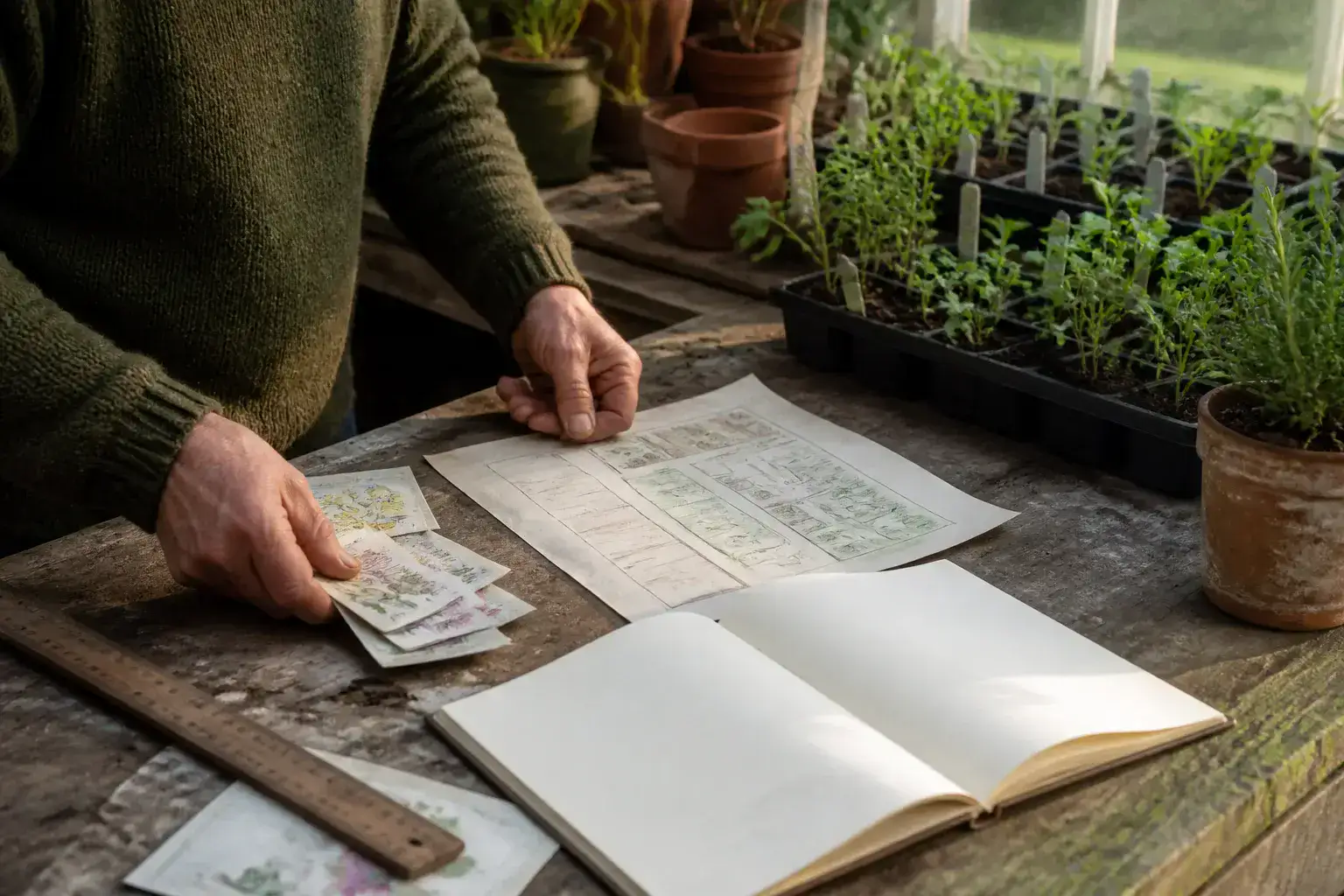
Before buying seed or a light, write down what the household actually cooks with, how much window space is available, and which months the light is weakest. A calendar with sowing dates, expected germination windows, and harvest intervals turns indoor herb growing into a routine instead of a series of rescues. Start with two or three pots of the herbs that get used weekly, get the light and watering right, and add a hydroponic system only after the soil pots are producing reliably.