
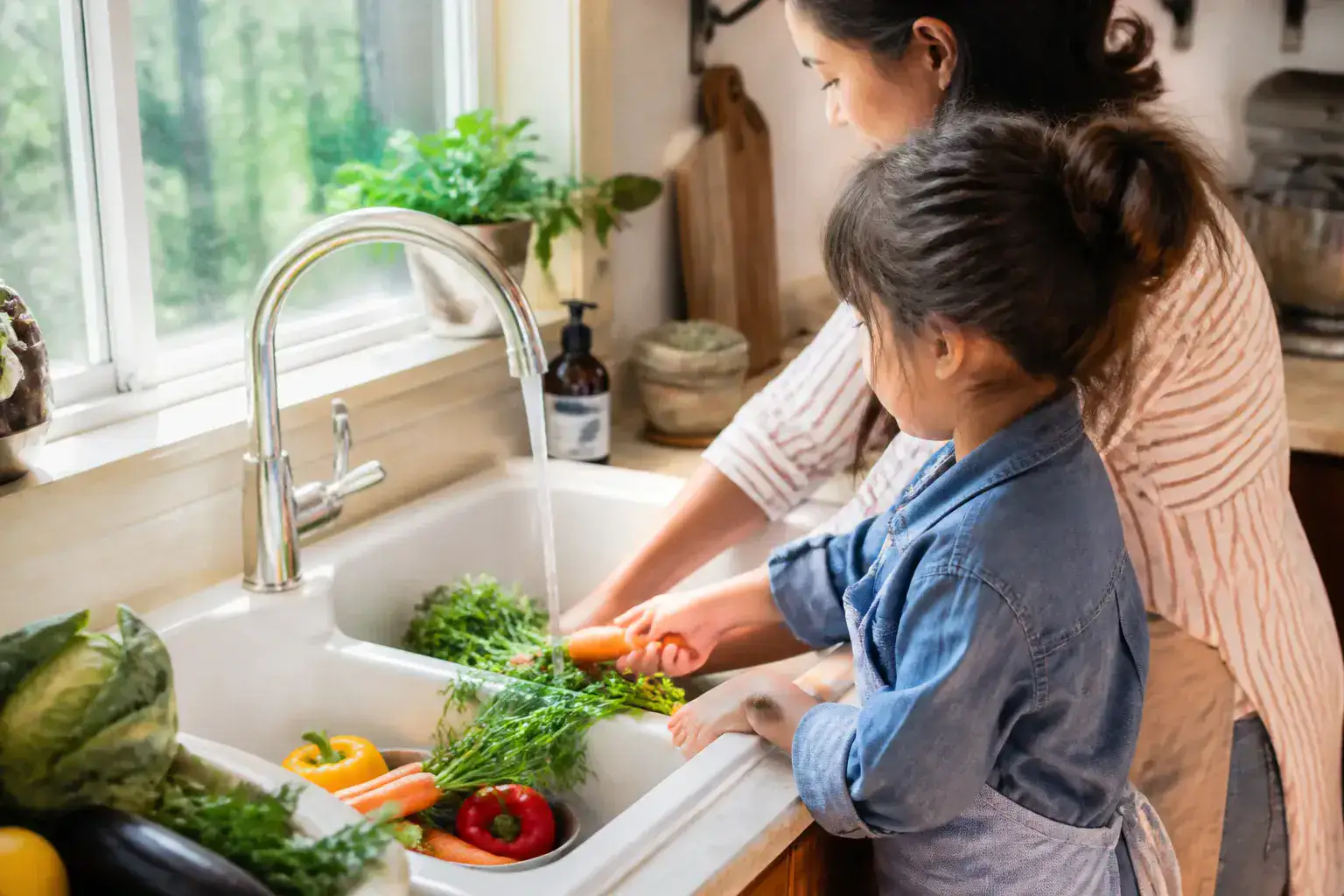
Familiarity grows when children see, touch, choose, and taste food without a performance attached.
Let vegetables be visible
Put one washed vegetable where a child can see it, not hidden under a recipe. A cucumber, pepper, or tomato can become a snack, a color prompt, or an ingredient to cut with help. Seeing food often is part of learning what it is.
The aim is not to make every child love every vegetable. It is to make the unfamiliar less dramatic.
Give a small job
Children can rinse greens, snap beans, scatter herbs, or choose whether a soup gets basil. The job should be real but not high stakes. A garden visit or market trip can provide the same sense of ownership without turning the outing into a lesson.
USDA MyPlate describes vegetables in several forms, including fresh, frozen, canned, dried, raw, and cooked. That flexibility is useful for families: a frozen pea still belongs on the table when the garden is quiet.
Repeat without bargaining
Serve a small portion beside something familiar, then let the next exposure arrive on a different day. A bean, a leafy green, or a roasted root can move through textures before a child decides what they think.
Food literacy is built by ordinary contact. The kitchen becomes a better classroom when it does not ask for a perfect answer at dinner.
Five practices, used without a scoreboard
First, keep a familiar food on the table so tasting a vegetable is not the price of eating dinner. Second, offer a very small portion. Third, change the preparation across the month: raw carrot, grated carrot, and roasted carrot are different sensory experiences even though the crop is the same.
Fourth, let a child make a bounded choice, such as peas or green beans, basil or parsley, soup or a tray roast. Fifth, invite a real job that matches age and ability. Washing produce, tearing lettuce, or carrying a market basket creates contact without requiring praise, a clean plate, or a performance for adults.
These practices are not a treatment plan and they will not make every food acceptable. Allergies, sensory needs, feeding difficulties, and medical concerns need appropriate professional support. At an ordinary family table, the useful goal is calm familiarity and a growing vocabulary for taste.
Let the season create repetition with variation
A market season repeats an ingredient naturally. Strawberries arrive for several weeks, then beans, tomatoes, squash, and roots have their turn. Use that rhythm. A child can recognize the same tomato in a basket, on toast, in soup, and in sauce without being served the identical meal four times.
Frozen and canned vegetables keep the practice going when local fields are quiet. USDA MyPlate includes vegetables in fresh, frozen, canned, dried, raw, cooked, and pureed forms. Read labels for the household's needs, but do not treat convenience as a failure of seasonal eating.
Keep one family note that records accepted preparations rather than rejected foods. 'Peas in rice' is more actionable than 'does not like vegetables.' The note gives the next cook a starting point and keeps a single difficult dinner from becoming a permanent identity.
Invite observation without asking for a verdict. A child can describe whether a carrot is crisp, whether a squash is sweet, or how a herb smells. That vocabulary turns tasting into useful information and gives adults a calmer way to plan the next preparation.