
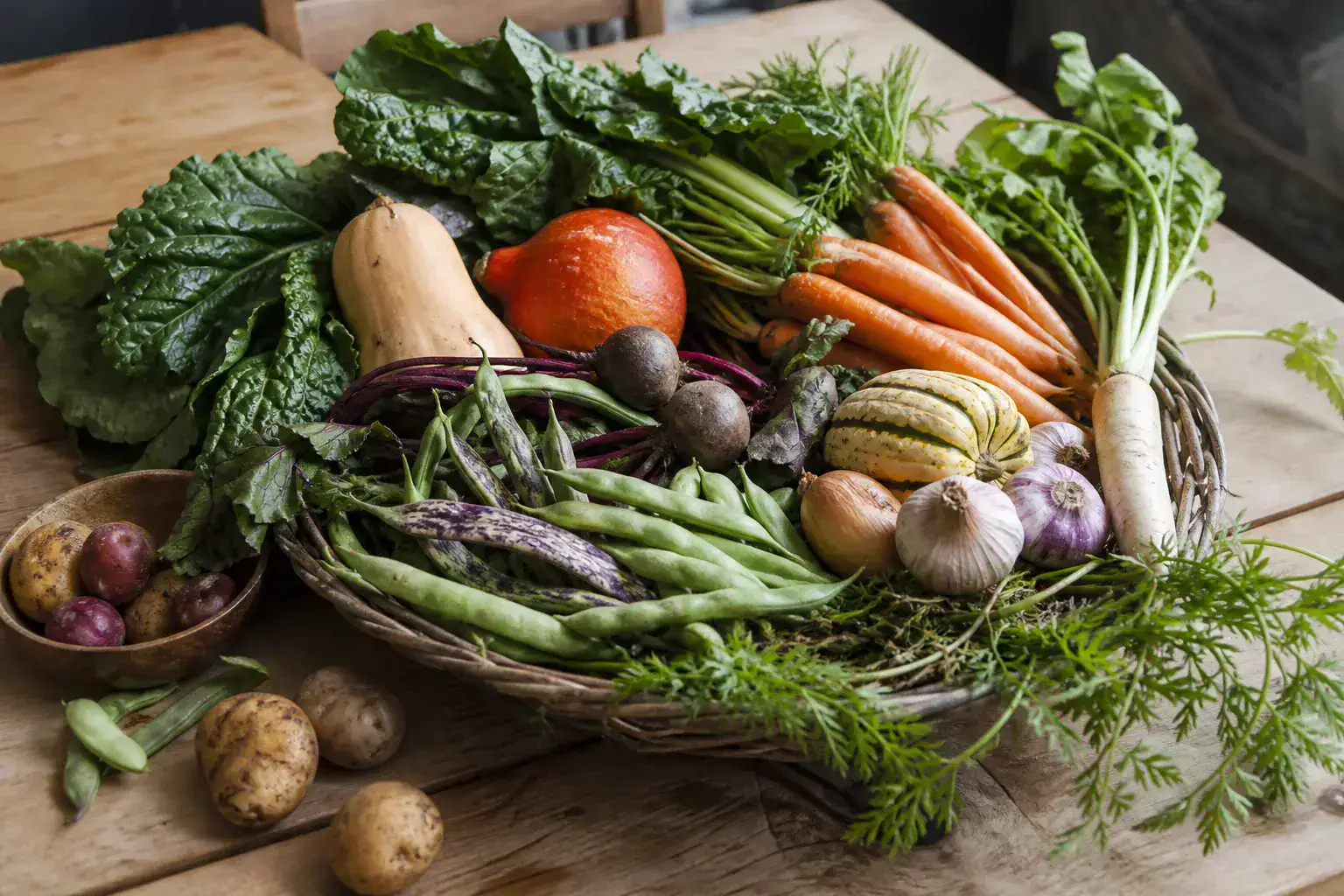
Use national guidance as a prompt for variety, then make the next meal local, affordable, and ordinary.
A broad number is not a meal plan
Vegetable statistics can make a problem visible, but they often hide the practical decisions that shape a meal. What is available nearby? What will keep until Friday? Who will cook it? A household needs a next step, not just a target that floats above the grocery bag.
USDA MyPlate groups vegetables by type and recognizes fresh, frozen, canned, dried, raw, and cooked forms. That is a more useful starting point than treating one format as morally better than another.
Build a repeatable rotation
Choose one fast vegetable, one sturdy vegetable, and one pantry companion. In summer that might be lettuce, tomatoes, and beans. In winter it might be cabbage, roots, and frozen peas. The rotation can change with the market while the structure stays familiar.
Iowa State's harvest guides also show why timing matters. A crop that arrives all at once needs a different plan from one that can be picked repeatedly.
Keep health language modest
Vegetables are part of a healthy eating pattern, but a single ingredient does not diagnose, prevent, or treat a condition. If you need individualized advice, use a qualified professional. For everyday cooking, focus on variety, ease, and food that will be eaten.
The best statistic is the one that changes a shopping habit without turning dinner into a test.
Translate a category into a shopping basket
A broad instruction to eat more vegetables becomes easier when it is divided by function. Buy one item for raw or fast use, one that tolerates a few days in the refrigerator, one storage crop, and one pantry or freezer option. The basket now has a sequence instead of a pile of good intentions.
Plan the most perishable item first. Greens may become tonight's salad, tomatoes tomorrow's soup, cabbage a later slaw, and frozen peas the fallback. This order reduces waste without requiring every vegetable to be prepared on the shopping day. The seasonal calendar can suggest what is likely to be abundant, but the condition of the food in front of you sets the actual order.
Price can change the mix without breaking it. Whole cabbage, carrots, canned tomatoes, dried beans, and frozen vegetables can carry a week when delicate produce is expensive. Variety is a pattern over time, not a demand for a rainbow at every meal.
Measure the habit that you can actually change
Population statistics answer population questions. A household log can answer a smaller one: which vegetables were bought, prepared, eaten, and discarded? Track that for two ordinary weeks. Do not count calories or turn the page into a judgment; simply look for the point where food stops moving.
If vegetables are repeatedly discarded before cooking, buy fewer kinds or schedule the fragile crop. If they are cooked but left over, adjust batch size or choose a second use. If the same two vegetables appear every week, add one seasonal item alongside them rather than replacing the reliable base.
The useful outcome is a loop: buy, store, cook, notice, and revise. National guidance supplies the direction. Markets, budgets, culture, appetite, and time determine the route a real household can sustain.
Review the log with the next shopping list in hand. Keep the vegetable that solved a busy meal, change the quantity that repeatedly lingered, and choose one new crop only when there is a clear preparation for it. Measurement is useful when it removes friction from the next week.